As Saudi Arabia expands its culture and entertainment industry under Vision 2030, content sectors centred on the younger generation — comics, animation, games — are growing alongside it. In particular, a notable shift is under way: rather than simply consuming content from abroad, local players are increasingly cultivating homegrown creators and developing their own intellectual property (IP) to expand into the Arab world and beyond.
One organisation worth watching in this landscape is Manga Arabia, a venture under Saudi Research and Media Group (SRMG). Manga Arabia translates and localises foreign comics into Arabic while also nurturing the region's own content and creators. It regularly distributes a free comics magazine for children, weaving in educational and social themes — science, school life, peer relationships — as it works to build a new generation of readers.
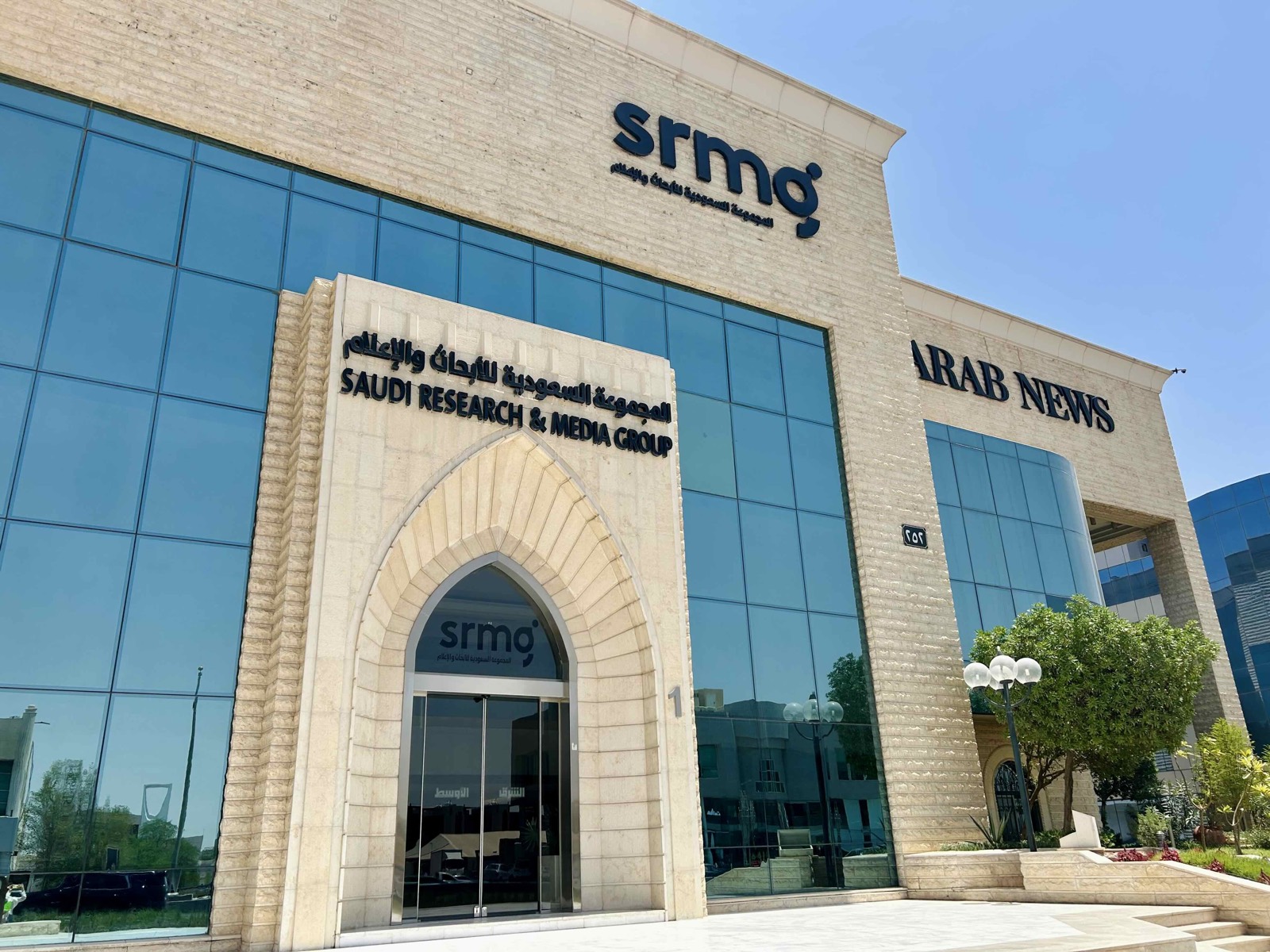
The Saudi Research and Media Group building, home to Manga Arabia — Source: photo by the correspondent
Korean webtoons, too, have recently found more points of contact with the Saudi market. How are Korean webtoons received by Saudi readers accustomed to Japanese manga? And what potential might Korean webtoon content hold in a Saudi comics market that is still growing?
The correspondent visited Manga Arabia in Riyadh and spoke with Suliman Hilal, Acting Manager for Translation and Publisher Relations, and Abdullah Alfaisal, Senior Public Relations Officer.
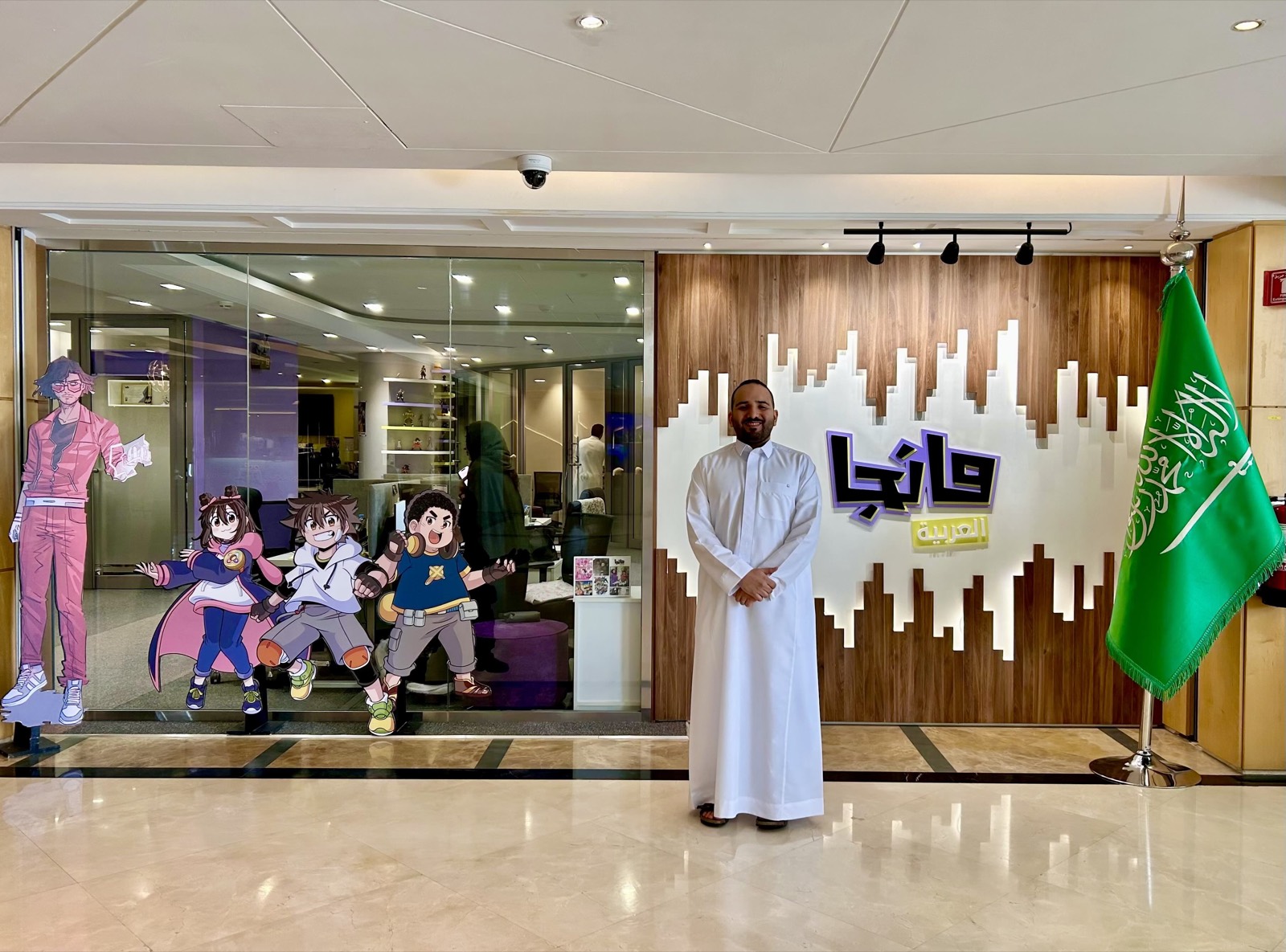
Suliman Hilal, Acting Manager for Translation and Publisher Relations, outside the Manga Arabia office — Source: photo by the correspondent
Manga Arabia: For Arab Readers, With Arab Creators
Q. First of all, what is Manga Arabia, and what is its aim?
Abdullah said Manga Arabia aims to introduce a wide range of foreign comics to Arab readers while also cultivating creators and original IP from the Arab world for expansion into the global market. Depending on readers' age, it runs Manga Arabia Kids for children and Manga Arabia Youth for teenagers and young readers, delivering content through both print and digital platforms.
Introducing popular works from abroad is only part of the goal; discovering new creators and works in Saudi Arabia and the wider Arab world is equally important. Abdullah said the long-term aim is for local content and IP to reach readers not only across the Arab world but in the global market too.
He added that, compared with animation, the comics industry still has considerable room to grow, and that building an environment in which younger generations can naturally encounter and enjoy comics is key to that long-term growth. As the base of young readers grows, he explained, local creators producing new stories and original content need to grow alongside it for a sustainable comics ecosystem to take shape.
Q. What kind of content do you offer younger readers in particular?
Abdullah said Manga Arabia does not treat children's comics as mere entertainment. Alongside storytelling, the content also engages with knowledge — science among it — and with subjects close to children's everyday lives, such as school and friendships.
He gave the example of stories and characters used to convey issues like bullying at school, getting along with friends, and treating others with respect and consideration. When producing or selecting content, he said, the team weighs not only whether it is entertaining but whether it suits the age group and what knowledge, values or message it can pass on to young readers.
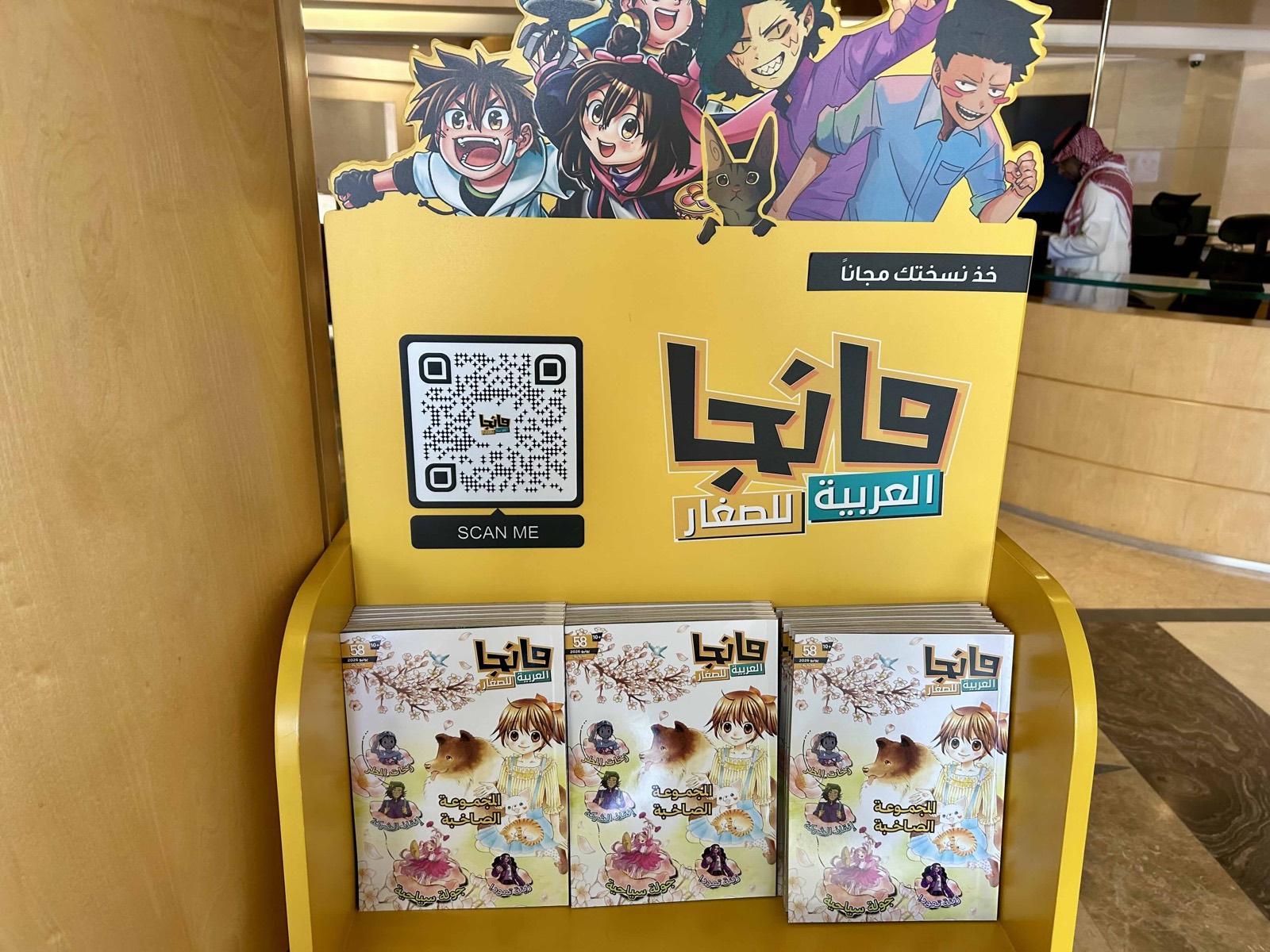
He noted in particular that the Manga Arabia Kids magazine is published free every month and distributed to places children can easily access, such as schools — widening access so that younger readers can encounter comics without cost and build a natural reading habit. This approach can be read as an attempt to use comics as a vehicle for education and knowledge while, over the longer term, cultivating a new readership for the Saudi comics industry.
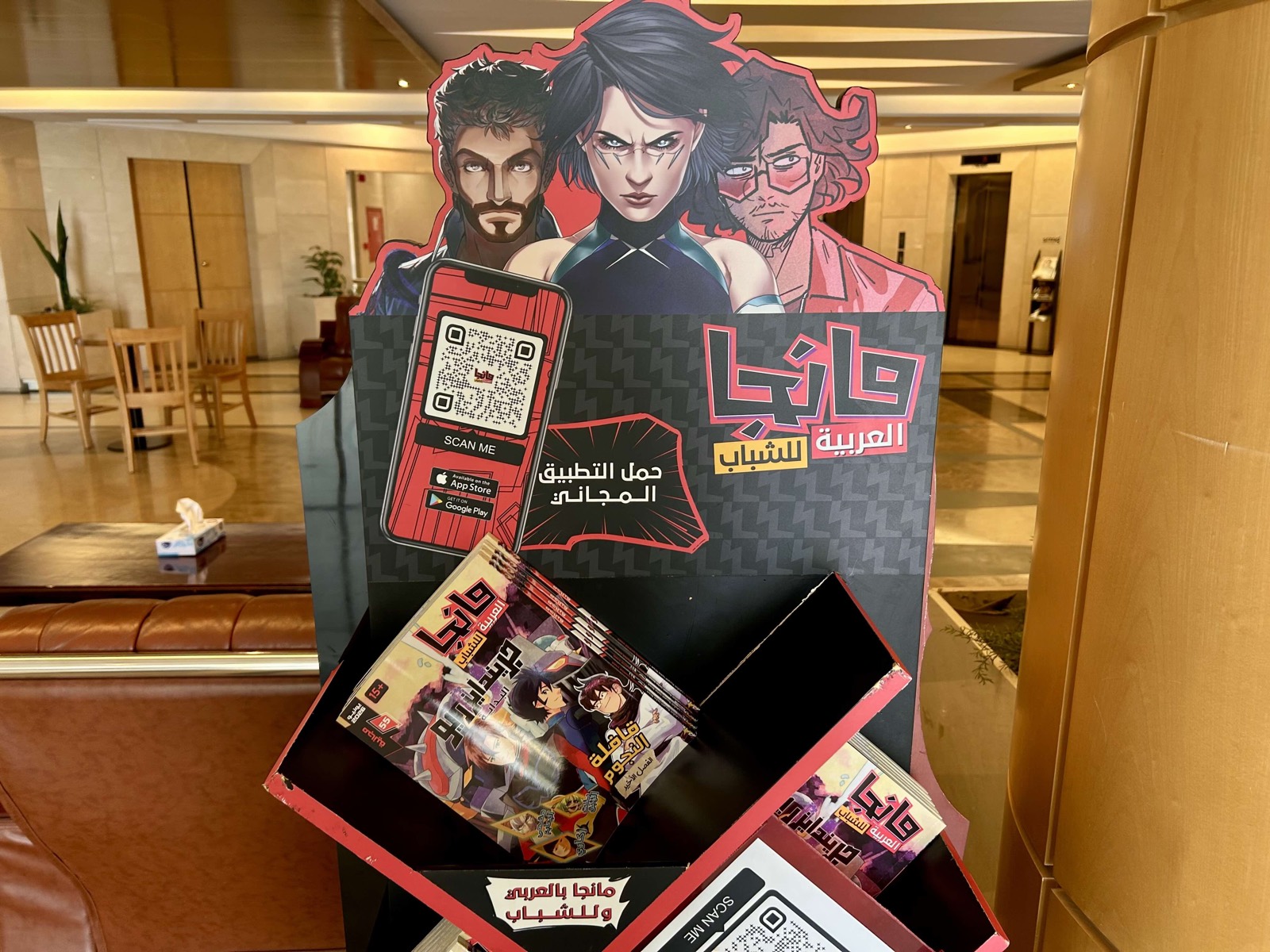
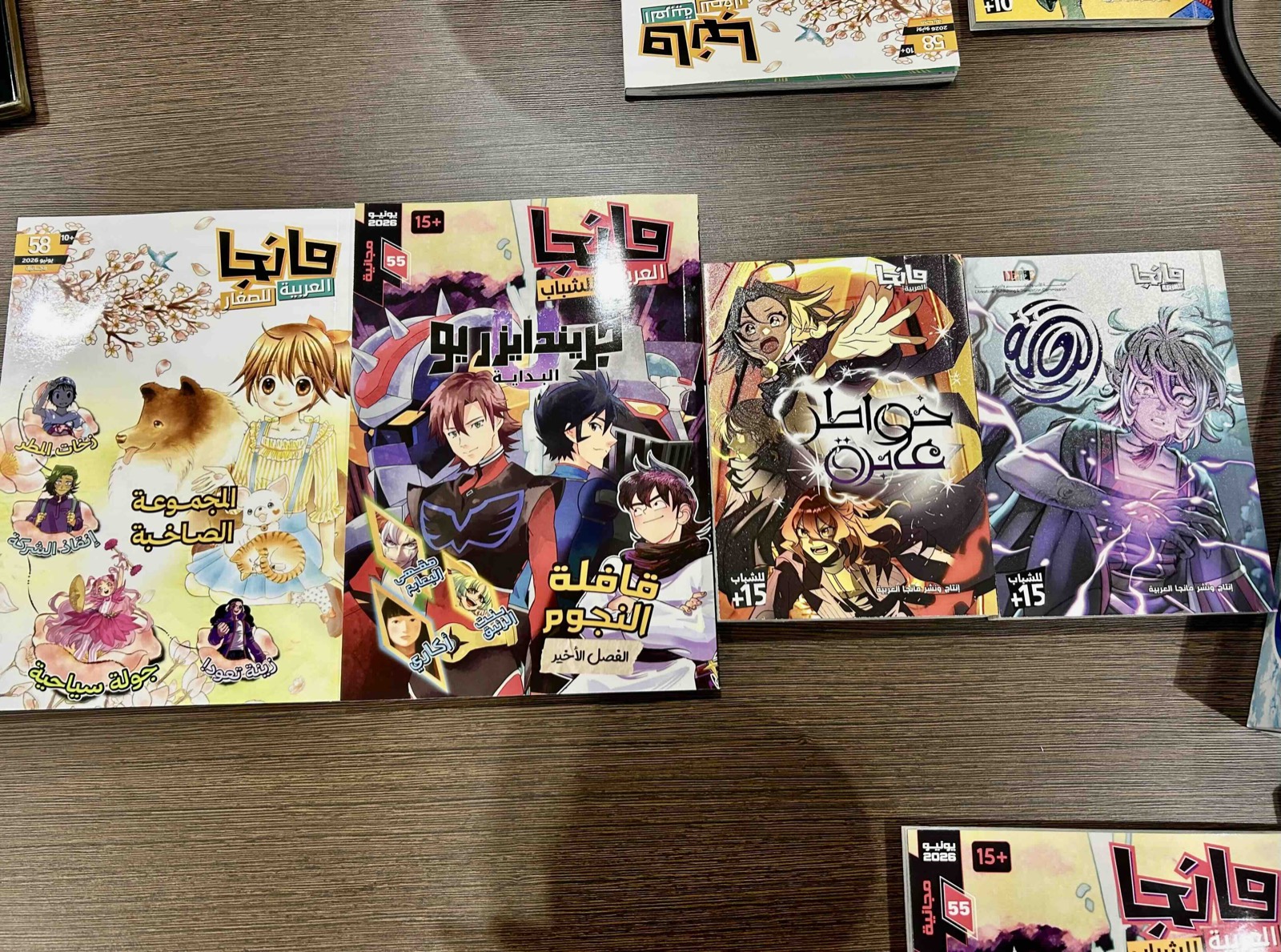
Monthly comics magazines on display in the lobby — Source: photo by the correspondent
Collaboration with Korean Webtoons, Localisation Already Under Way
Q. Are you currently working with any Korean webtoon companies?
Suliman said Manga Arabia is currently working with Korea's Kidari Studio and V-Bros to translate and localise Korean webtoons into Arabic, introducing them through Manga Arabia Youth. Arabic-language Korean webtoon services launched in 2025, bringing titles including Medical Return, Plants Human and A Compendium of Ghosts to Saudi readers. Suliman explained that when bringing in a work from abroad, the team does not simply judge it by how famous the original is in its home market; instead, it weighs local readers' age, taste, genre and cultural fit before deciding what to introduce. With collaboration already under way with Korean companies, the entry of Korean webtoons into Saudi Arabia can be said to have moved past the stage of mere possibility and into one of actually reaching local readers.
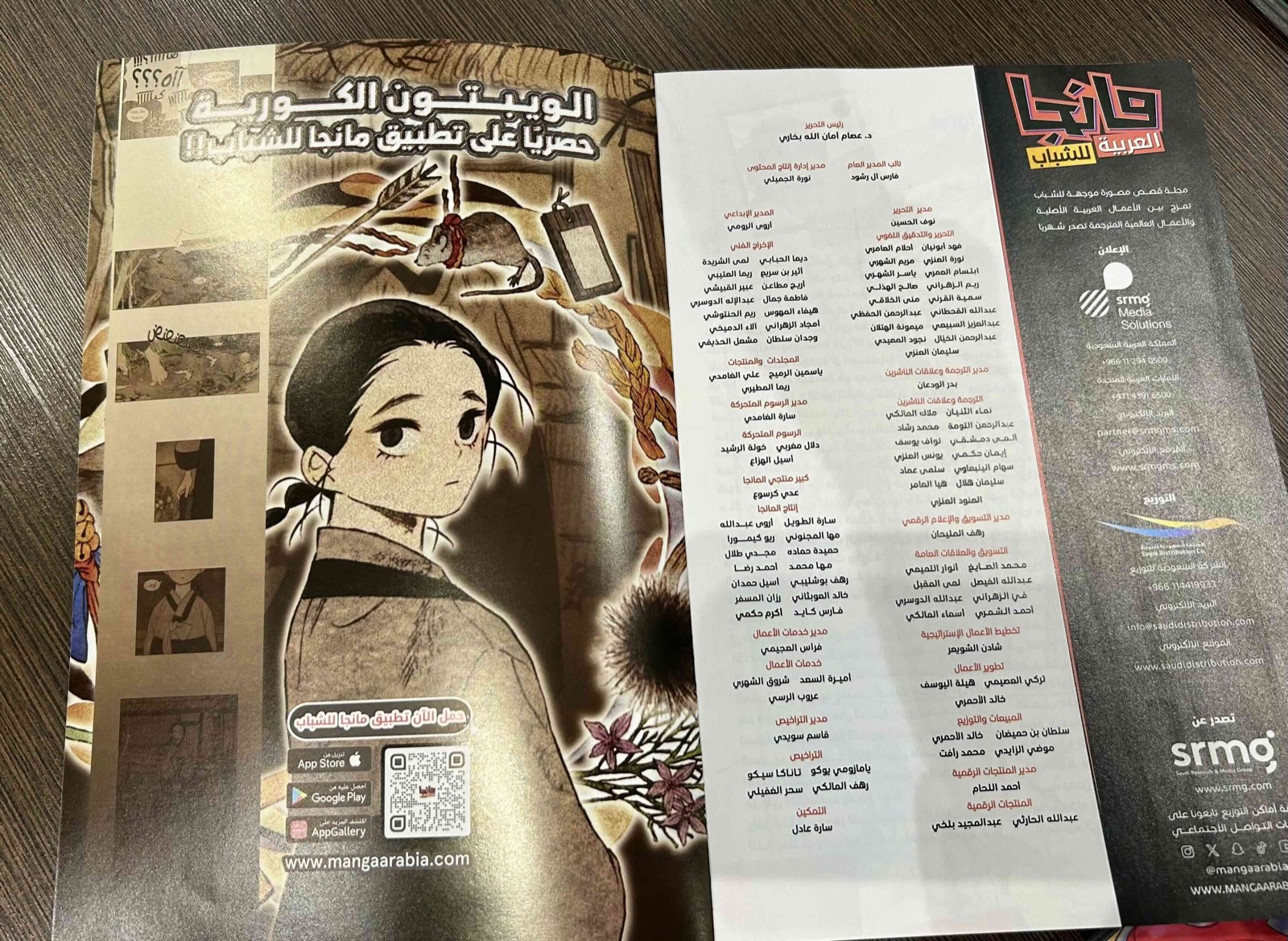
The Korean webtoon A Compendium of Ghosts, featured in Manga Arabia's monthly magazine — Source: photo by the correspondent
The Standards Behind Localisation: Religion, Culture and Visual Expression
Q. How does localisation work when introducing foreign comics to Saudi Arabia?
Suliman said translating the original text into Arabic is not where the work ends. Alongside translation, the process of localisation — checking that content fits local culture and values — matters greatly, and religious elements and sexual content in particular are closely reviewed. Not only dialogue and story but visual elements, such as a character's appearance and clothing, are also examined. Drawing on his experience localising Japanese manga, Suliman said that when a character's degree of exposure does not meet local cultural standards, the original artwork is sometimes altered. "Sometimes," he explained, "a character needs to be given more clothing."
He stressed that this process of adjustment — keeping the appeal of the original while making it something local readers can naturally accept — matters even more for content aimed at children and teenagers.
For Korean webtoons too, entering the Saudi market will require localisation that goes beyond simple Arabic translation to take account of religious and cultural standards and visual expression.
The Genres Saudi Readers Enjoy
Q. What genres of comics do Saudi readers prefer?
Abdullah said preferences vary by readers' age and gender. Young female readers show strong interest in romance and love stories, while children's readers are drawn to stories they can relate to in daily life, such as school life, along with comedy and action-heavy works. He added that as readers get older, the range of genres they engage with broadens. This local taste — spanning romance, drama, fantasy, school stories and action — overlaps with the varied genres Korean webtoons have built up over the years. Abdullah also introduced several titles popular with Saudi readers, noting that alongside foreign comics, many works by local Saudi artists are also gaining popularity.
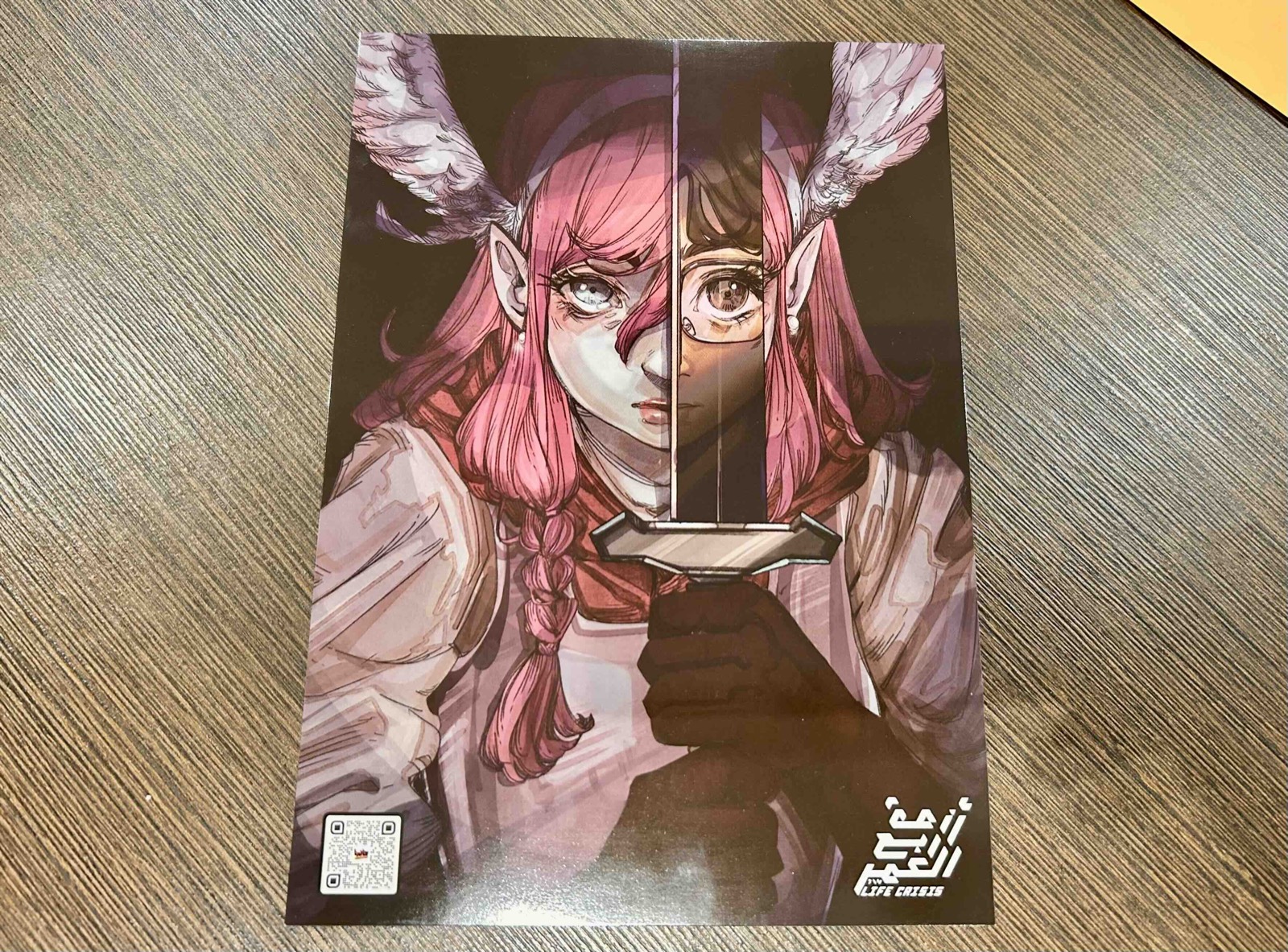
Local comics popular with Saudi readers — Source: photo by the correspondent
Webtoons and Manga: Different Rhythms of Storytelling
Q. What differences do you see between Korean webtoons and Japanese manga?
Suliman named the way each is read, and the story rhythm that follows from it, as the biggest difference between the two. He put it simply: "the flow is different."
Japanese manga is typically read by turning pages from right to left. Suliman explained that, because of this, the layout of the page itself plays an important role in shaping the story's rhythm.
He noted that the bottom-left of a page — the last thing a reader sees just before turning to the next — often carries a big movement, a dramatic moment or strong action, a device meant to build the reader's curiosity and pull them naturally into the next page.
Korean webtoons, by contrast, are read by scrolling down a smartphone screen. Rather than pulling readers forward with a big movement or action at the end of a page, as Japanese manga does, Suliman assessed that the story tends to unfold more slowly, with a stronger dramatic character that follows characters' thoughts, feelings and relationships.
There is a difference in visual presentation too. Suliman explained that Japanese manga is generally produced in black and white, with colour used in some works aimed at children, whereas Korean webtoons are mostly produced in colour. He said the format itself — long, continuous colour images read vertically — is a distinctly Korean development. While familiar to Korean readers, he suggested, it can feel like a genuinely different reading rhythm and visual experience to readers who have mainly encountered comics through Japanese manga.
Looking Ahead: Toward a Two-Way Exchange
Q. How do you see the potential for future collaboration with Korean webtoon IP?
Suliman said Manga Arabia remains open to collaboration with publishers and content companies from abroad, and that, as already described, collaboration with Korean webtoons has genuinely begun.
He said that going forward it will remain important to identify suitable works by weighing not only a title's name recognition but local readers' age, taste and cultural fit, and that Arabic translation and localisation play a key role in the process of a work reaching readers in the local market.
Suliman said he hopes this collaboration develops into a two-way exchange rather than staying a one-directional introduction of Korean content to Saudi Arabia — with content made in Saudi Arabia and the wider Arab world eventually introduced to Korean readers as well.
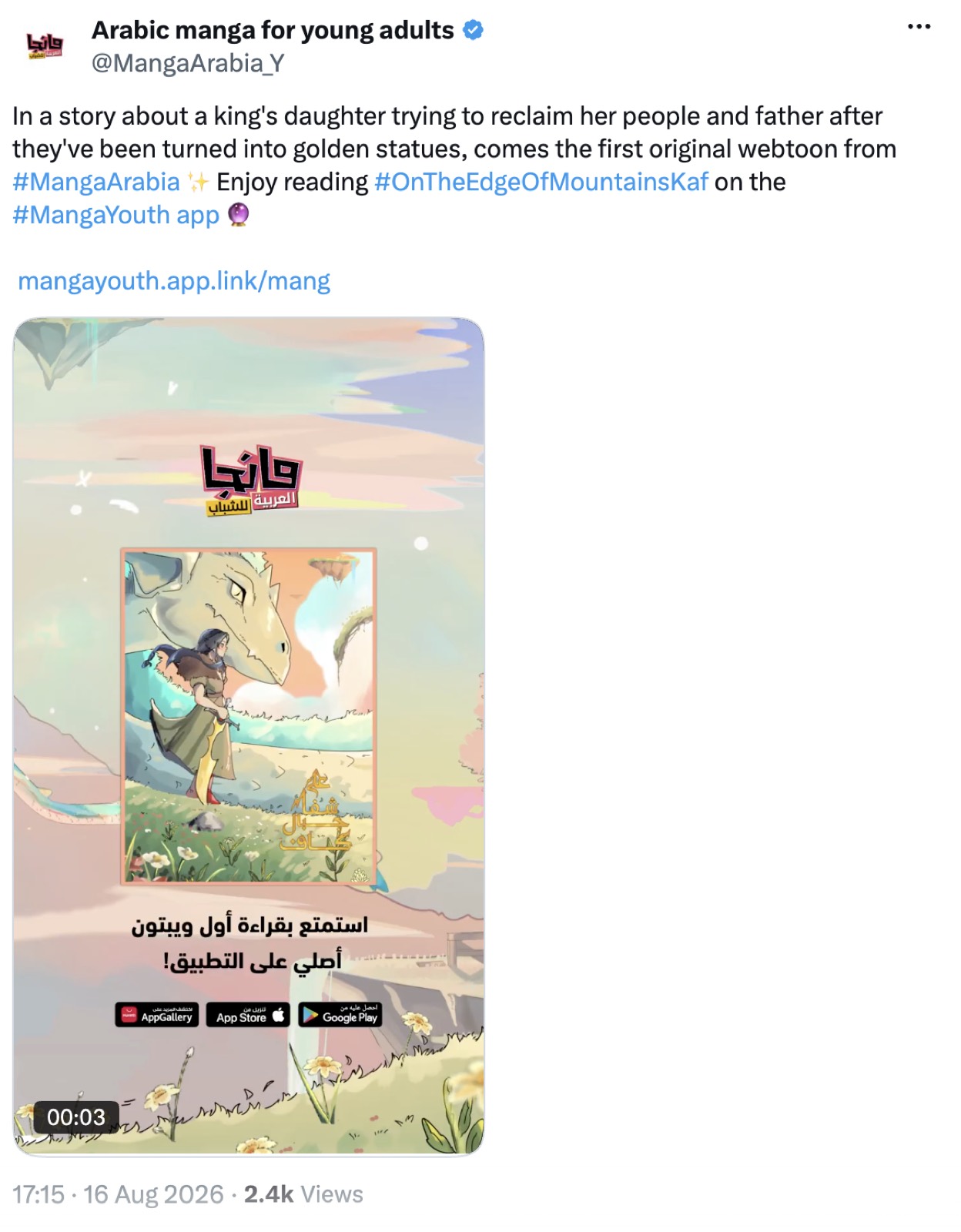
Abdullah then introduced Manga Arabia's first original webtoon-format work, recently produced in Saudi Arabia. On the Edge of Mountains Kaf, Manga Arabia's first original webtoon, tells the story of a king's daughter setting out to reclaim her father and her people after they are turned into golden statues. Abdullah said the work was released through the Manga Arabia Youth app.
On the Edge of Mountains Kaf, Manga Arabia's first original webtoon — Source: Manga Arabia for Young Adults official X account (@MangaArabia_Y)
A Saudi Comics Market Building Its Readers, A New Opportunity for Korean Webtoons
What stood out most about this visit to Manga Arabia was less the current size of the market than the deliberate effort to build the readers who will make up that market in future. Weaving knowledge and social themes naturally into a free children's magazine, and cultivating younger readers through it, reads as an attempt to expand comics beyond entertainment into a medium for education and knowledge.
Korean webtoons are already reaching Saudi readers through Arabic translation and localisation. As Suliman explained, it will remain important going forward to identify suitable works by weighing not only a title's recognition but local readers' age, taste and cultural fit.
That Manga Arabia recently unveiled its own first webtoon-format work, produced in Saudi Arabia, also signals a shift under way in the Saudi comics market. Korean webtoons are being introduced to Saudi readers through localisation, while Saudi Arabia has itself begun producing original content in webtoon form. Saudi content is not yet at the stage of being introduced to Korean readers, but the possibility remains open for it to develop, in time, into a two-way exchange with content from Saudi Arabia and the wider Arab world reaching Korea as well.
Image Sources & References
— Photos by the correspondent
— Manga Arabia official website, mangaarabia.com
— Manga Arabia for Young Adults official X account (@MangaArabia_Y), x.com/mangaarabia_y