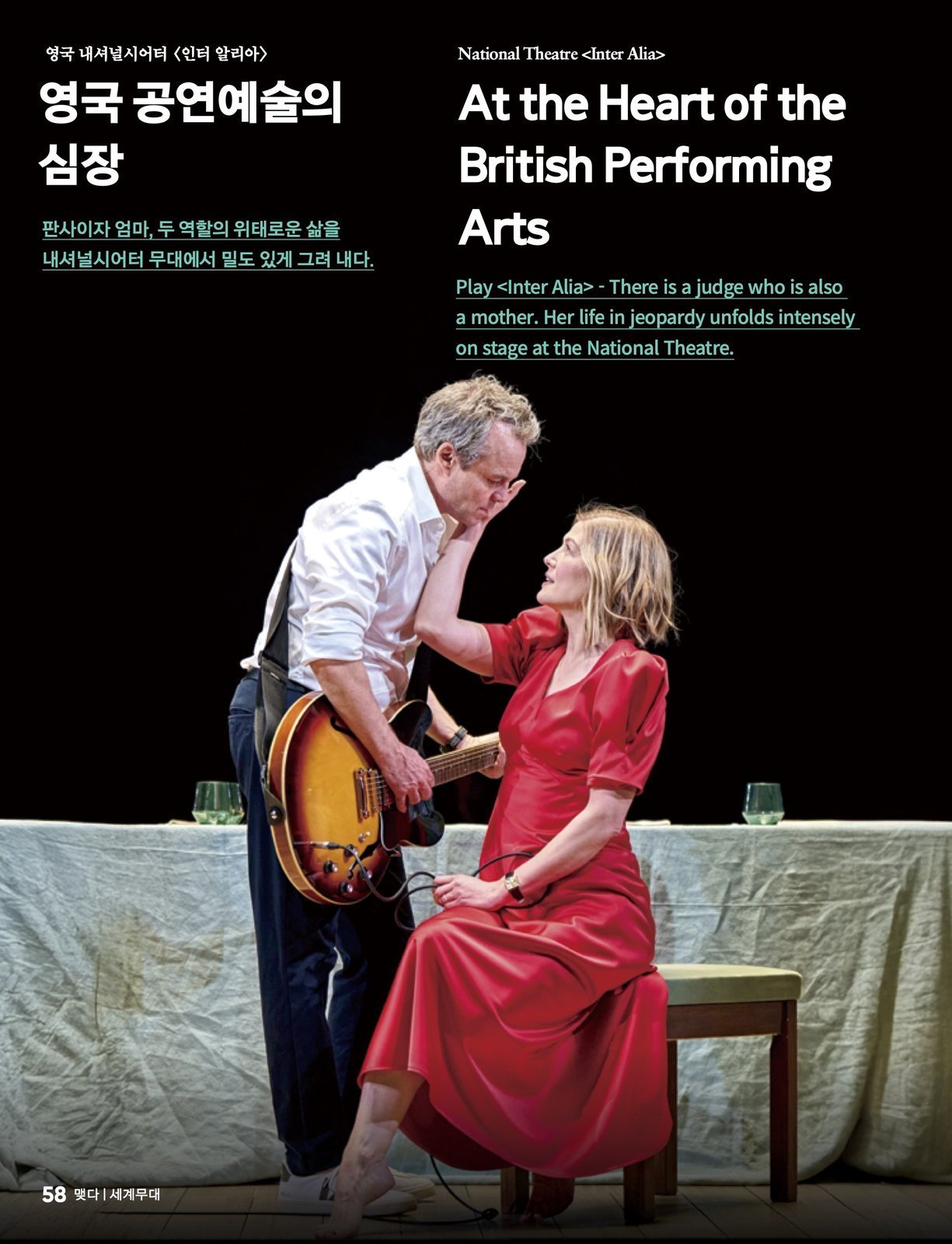
▲ Inter Alia — Photo: Manuel Harlan (National Theatre)
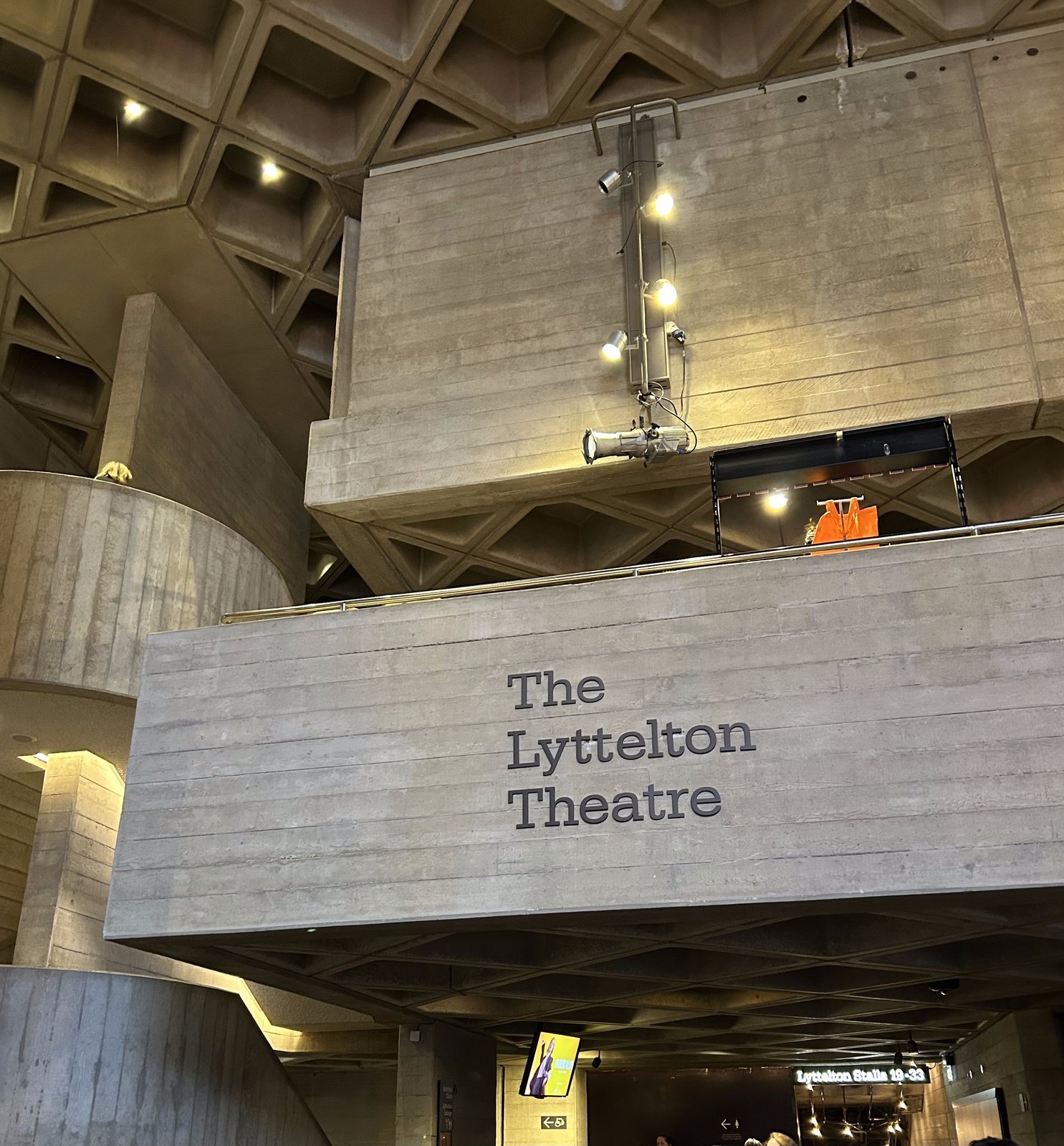
The National Theatre is located at the South Bank of London facing the Thames, which is a great location for a theatre. Just nearby, you can also find major cultural spots such as the BFI, London Eye, Southbank Centre and Tate Modern. So both tourists and local residents feel familiar with the area. The Theatre was founded in 1963 by Laurence Olivier and it opened its spaces one by one, starting with the Olivier in 1976. Designed by architect Denys Lasdun, the Theatre represents the Brutalist style and has been listed at Grade II in the UK. The Theatre has three spaces: the Olivier (about 1,160 seats), the Lyttelton (about 890 seats) and the Dorfman (about 400 seats). These spaces enable the Theatre to present a wide range of performances including large-scale, spectacular ones and smaller, experimental ones. It is an open venue where daily life and art meet. It is not only Britain's representative theatre but also one of Europe's major venues of the performing arts.
A Hot New Production Gazing at Today's Maternal Love and Masculinity
The play Inter Alia met its audience at the Lyttelton from July 23 to September 13, 2025. It is a recent production by writer Suzie Miller, who drew attention with the success of Prima Facie, and director Justin Martin. World-renowned actress Rosamund Pike was cast as Jessica to make her debut on stage at the Theatre. Despite its relatively high ticket price (around 100 pounds), all the shows of the play were sold out and it will also be in the West End soon. All this proves the quality and popularity of the production. Plus, from September 4, audiences in some countries can even enjoy the performance through NT Live screenings.
▲ National Theatre lobby, London — Photo: Hyojung Jung
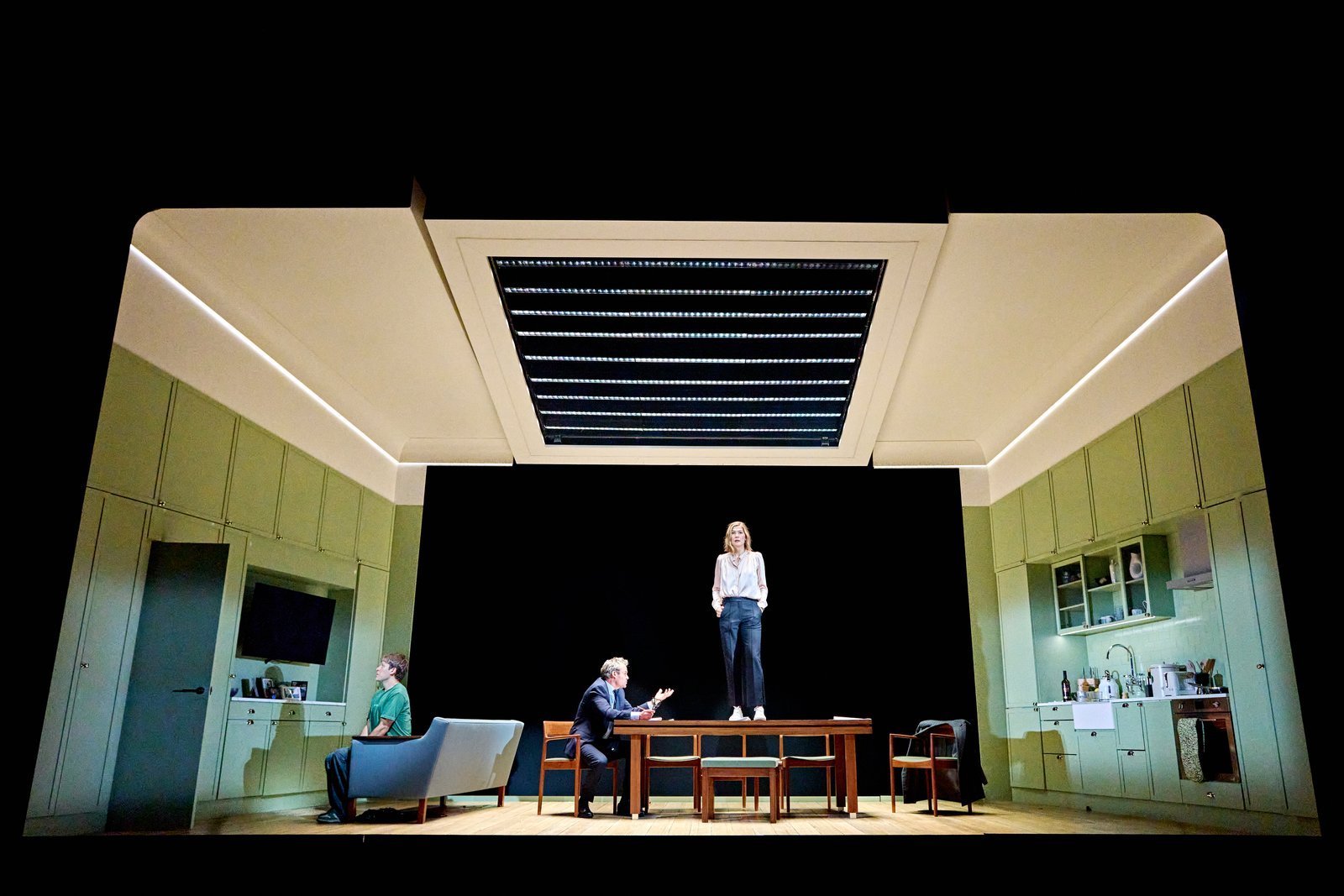
▲ Inter Alia in production — Photo: Manuel Harlan (National Theatre)
Inter Alia is a legal term meaning "among other things." In the play, the term symbolizes the life of a modern woman who juggles multiple roles such as a wife, mother, colleague and friend in addition to her professional identity as a judge. In fact, the legal system depicted in the play has long been male dominant; women had professional access to the system only after the mid-20th century. Even today, women judges make up less than half of the judges in the English and Welsh legal system. The play gazes at the reality and inner burden of women judges who "must" gain authority within such a system.
Duality between Justice and Maternal Love, between Judging and Being Judged
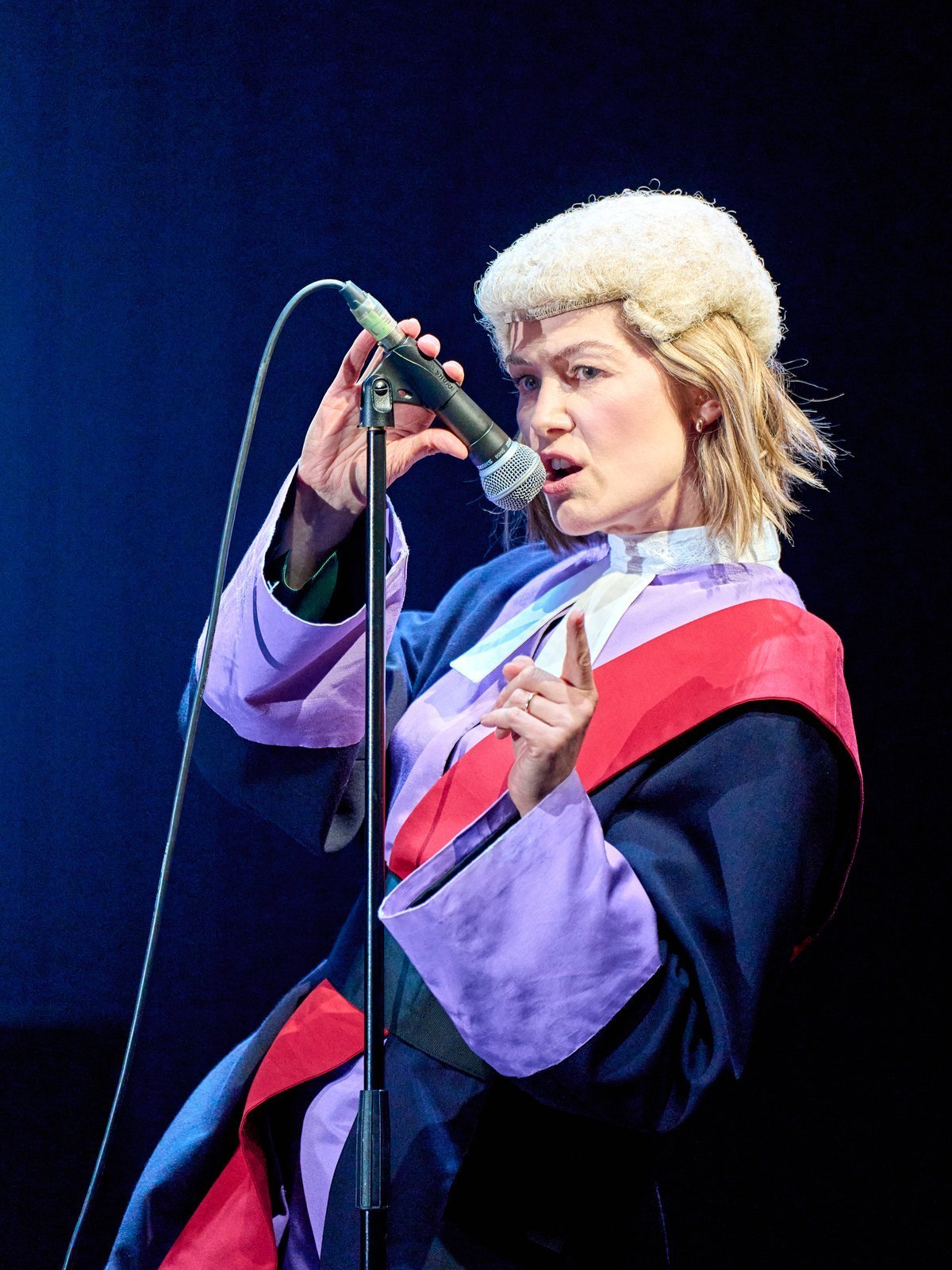
▲ Inter Alia — opening scene — Photo: Manuel Harlan (National Theatre)
The very first scene of the play feels quite intense. Jessica's son plays the drums and her husband, the electric guitar. Jessica is wearing a traditional robe for British judges, which is reinterpreted for the stage. Just like a rock star, she appears on a lift, holding a microphone. Such a conflict between the image of authority and a rock performance leaves a strong first impression for the audience. The stage symbolizes a home that looks perfect from the outside. The meticulously decorated house looks like a service module or a pastel-colored space capsule, which feels somewhat artificial and unrealistic. When Jessica returns to her place as a mother and wife, the stage set at the back comes forward to reassemble the house, something you would see during spacecraft docking. This seems to illustrate how the family regains its balance which is actually quite precarious. When her son confesses to a crime, the house is divided into left, right and upper parts. This seems to visualize the psyche of Jessica who sees her perfectly maintained life shatter into pieces.
In a nutshell, the play is about a conflict between justice and maternal love. As a judge, Jessica used to be on the side of women who fell victim to sexual violence. Now, she faces her own son as an offender's mother. She tries to make use of the law to keep her son from being punished. But feeling guilty, he chooses to confess to a crime and leaves home. Then the playground at the back of the stage moves forward and Jessica goes back to her past moment when her son got lost. This maximizes her fear of losing him definitely this time.
Here, you can see clearly what Suzie Miller is trying to say through the play. That is, Jessica is a judge who judges others but at the same time, she is also someone judged by society, her family and herself. A cold voice in court and an inner voice at home coexist in multiple layers. And the play tells us how far someone's inner crack could go.
Theatrical Motif and Contemporariness
The motif penetrating the play is a fear of losing one's child. At the beginning, a yellow puffa jacket appears repeatedly just like in a puppetry show, symbolizing ceaseless anxiety and loss. The child actor appears toward the end of the play and before that, his existence is replaced by mime and shadow play. When he is a child, his mother is afraid that he may get lost (physical loss). When he is a teenager, she is afraid that he may collapse for some bad reason (moral, social collapse). The play clearly illustrates the shadows thrown by such multiple fears of loss.
In the meantime, the play also resonates with today's reality. English and Welsh youth justice statistics (2023–2024, Ministry of Justice) indicate that about 12,000 teenagers (an 8% increase from the previous year) were subject to criminal punishment in court and that 84% of the first-time offenders were boys. During the same period, cases of sexual violence involving teenagers increased about 47%. In legal circles, a gender discrepancy still exists for childrearers. Such statistics support the idea that the story of parents, children and social phenomena told in the play isn't something abstract at all. Indeed, the play brings to stage our contemporary society's inconvenient truths. The following line stays with us long after the end of the play.
"Maybe none of us know our children as much as we think."
Sources
Photography: Manuel Harlan (National Theatre) · Hyojung Jung
Originally published in Monthly National Theatre of Korea, November 2025 — World Stage section (pp. 58–61)